


Ongoing scratching, excessive licking, or recurrent skin irritation could indicate atopic dermatitis.
See if your dog qualifies
Dogs with atopic dermatitis can't tell us what's wrong, but their behavior often provides important clues. If your dog is showing any of the following signs, it may be a sign of allergic skin disease:

Scratching persistently
around face, ears, paws, or belly

Licking or chewing
their paws

Rubbing their ears
or shaking their head frequently

Redness, irritation,
or recurring skin infections

Seasonal flare-ups
that keep coming back

Restlessness
settling at night
Even mild itching, licking, or discomfort can be your dog's way of telling you something isn’t right.
Canine atopic dermatitis (CAD) is a chronic, inflammatory skin condition caused by an overactive immune response to everyday environmental allergens, such as pollen, dust mites, or mold.
It is one of the most common reasons dogs visit the veterinarian, and one of the most challenging conditions to keep under control.
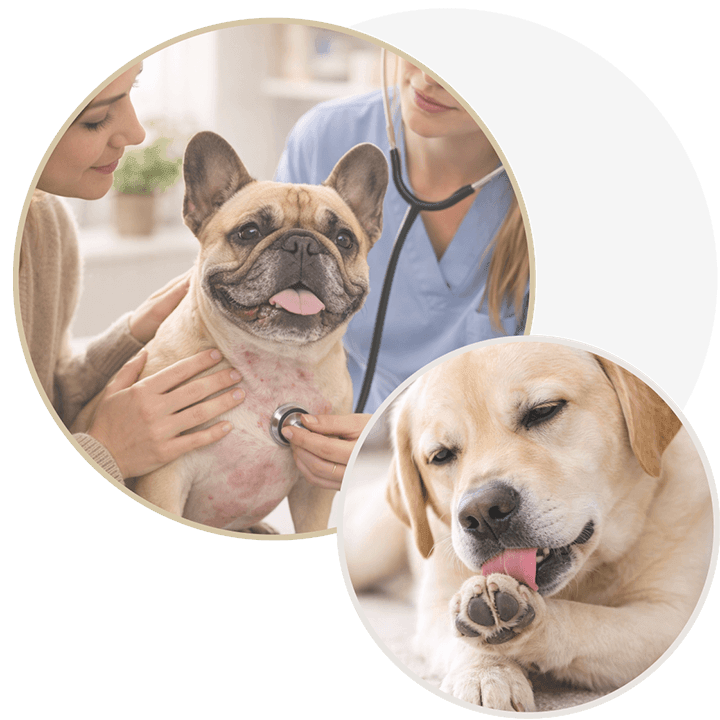


attentive veterinary care for the full duration of the study.
If your dog qualifies, your veterinarian will explain what participation involves and ensure all of your questions you might have are answered before you decide whether participation is right for you and your dog.

Administered on Day 0, Day 84, and Day 168 — approximately three months apart.
Visits over a six-month period to monitor your dog's health and comfort.
Brief home-based itch scoring on select days and observation if behavior changes.
Blood work and physical exams as part of standard study protocol.

Canine atopic dermatitis (CAD) is a chronic, inflammatory skin condition caused by an overactive immune response to everyday environmental allergens, such as pollen, dust mites, or mold.
Current treatments help many dogs, but for others, itch control is incomplete or wears off over time. Researchers are actively working to develop new treatment options that may provide more consistent and longer-lasting relief for patients.

To find out if your dog may be eligible, speak with a member of your veterinary team today. There's no obligation, just a conversation about whether this study might be the right fit.


